New inquiries
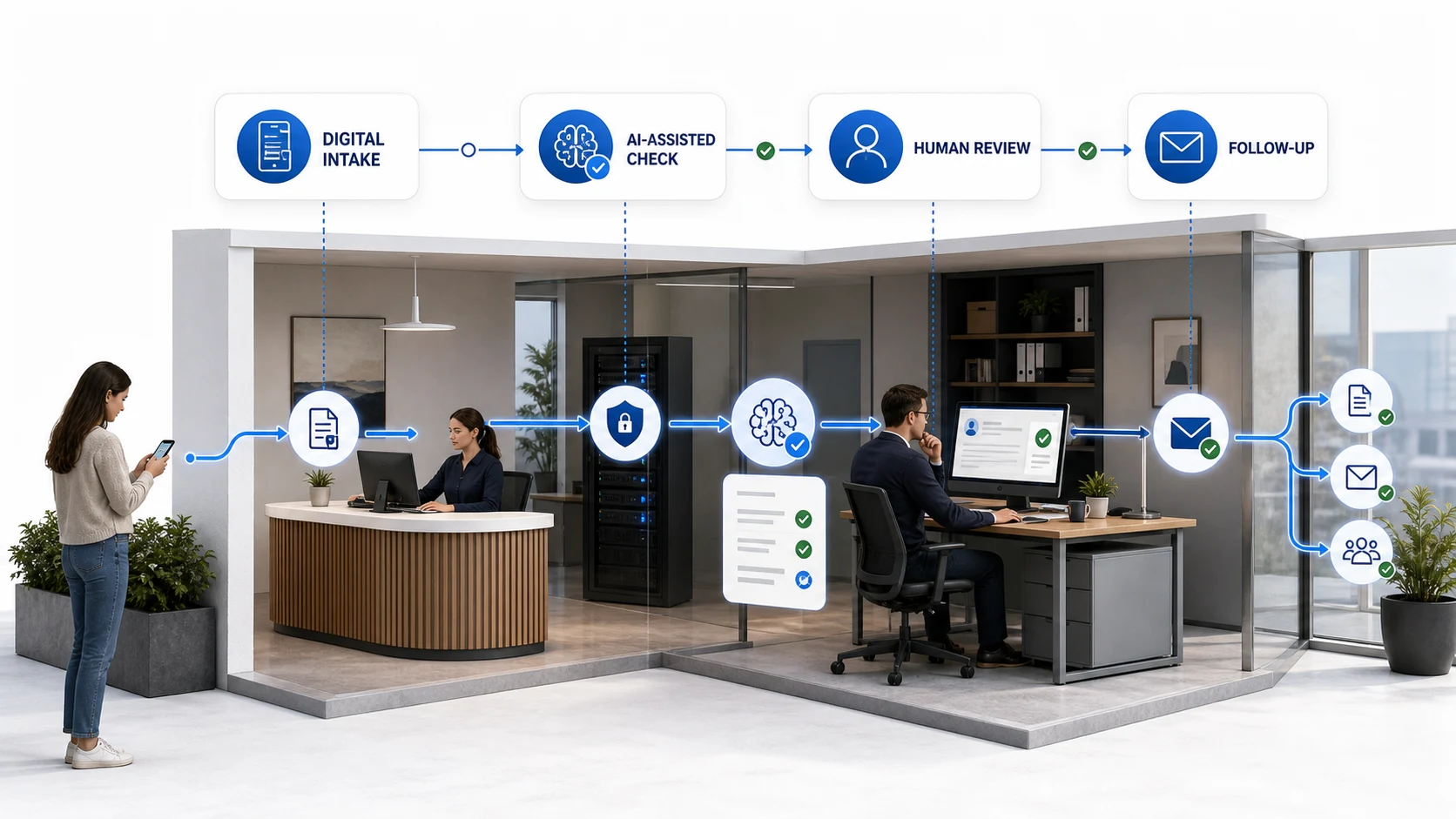
Collect the request once, check for missing details, create or update the customer record, draft an acknowledgment, and assign the right owner.

AI & workflow automation · Sussex & Morris County
TechBoot connects forms, email, documents, and business systems so employees spend less time copying information and chasing updates. We use workflow automation and focused AI agents to prepare work, route approvals, and coordinate follow-up.

Where to look first
Start with a task your team repeats often. We map how it works today, identify the manual steps, and check what the existing tools can already handle.
These are example starting points, not a requirement to replace every system or use AI throughout the process.
Collect the request once, check for missing details, create or update the customer record, draft an acknowledgment, and assign the right owner.
Turn notes, forms, photos, and emails into a consistent scope summary so the person preparing the quote starts with better information.
Extract useful fields from applications, invoices, orders, or PDFs; compare them with business rules; and route only the exceptions for review.
Coordinate forms, approvals, accounts, equipment, training, and reminders from one accepted offer or manager request.
Use status changes and due dates to prepare updates, create tasks, and alert an employee when a customer needs a personal response.
Collect updates from the systems employees already use, prepare a concise summary, and highlight the few items that need attention.
Starting with a brand-new app idea? That is a different kind of engagement.
Explore AI development consultingWhere an agent can help
A rule can send every new request to an inbox. A focused AI agent can read the request, retrieve relevant information, and use approved tools to prepare a summary or draft response.
We give it a specific job and limited access. Unclear requests and customer commitments go to an employee—not an unattended decision.
A customer submits a web form or sends an email. Before an employee opens it, the agent prepares the request for review—without promising a price, scheduling work, or making a commitment on its own.
A form, email, document, or another approved source starts the workflow.
Retrieve only the relevant service rules, customer history, and examples.
Check completeness, identify the likely need, summarize the facts, and create a draft using limited tools.
An employee handles exceptions and approves pricing, scheduling, or commitments.
Send the approved update, create the task, and store the source, reviewer, and result.
How we build it
For the service-request example, we would connect an approved form or inbox, define the information the agent may read, and create a review queue. We test with representative requests—including missing details and misleading instructions—before allowing approved actions in the live systems.
Define the input, expected output, owner, and cases that must stop for review.
Use supported integrations or APIs with only the permissions needed for the task.
Check incomplete requests, inaccurate summaries, duplicates, and unavailable systems.
Document approvals, logs, failure alerts, and how an employee pauses or corrects the workflow.

Client example · Seasonal hiring
TechBoot replaced a local employer’s paper application process with Jotform intake, AI-assisted field checks and experience summaries, and automated handoffs for interviews, approvals, documentation, and onboarding.
The workflow saved administrative time while employees remained responsible for reviewing applicants and making hiring decisions.
Read the client storyBased in Sparta · Serving Sussex & Morris County
Share the challenge, the current environment, or the change you are planning. Matt will review your message and respond directly.